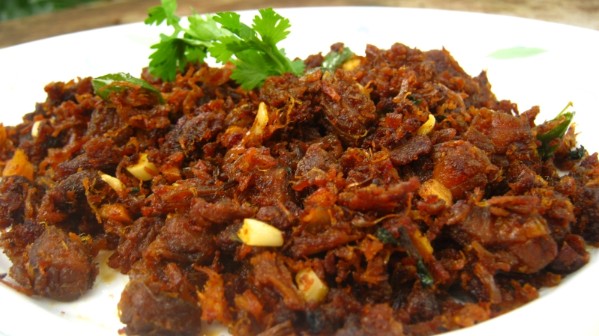
Sir Can I carry 5 KG Fried Beef (Buffalo) in India ?
Choose your language here –
News: BJP (Indian ruling party – supporters of Hindu religion/culture) has banned the slaughter or eating of beef in an Indian state. According to BJP, the cow is their (Hindu) god.
Hello everyone, before I begin, I want to mention that I will be using the term ‘Hindu.’ I know not everyone may support this, but in general, it is the term I need to use. I apologize if any of my friends are hurt by this.
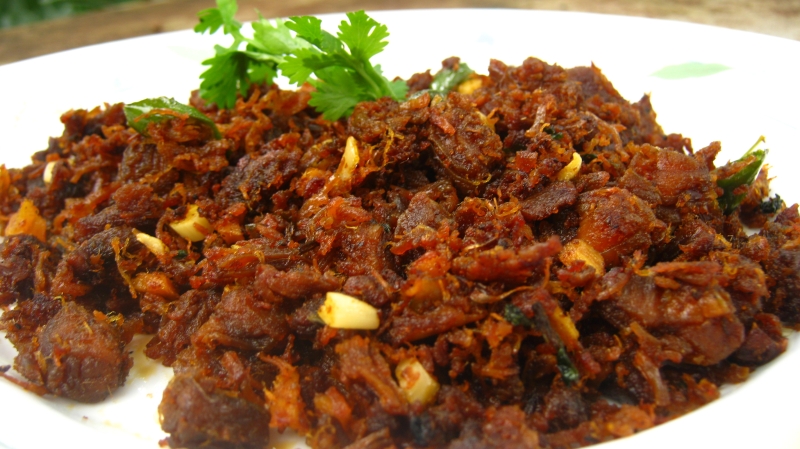
My friends told me to bring 5 kg of fried beef (buffalo meat) when I return to Qatar. Am I allowed to carry it? Here in Kerala, no one slaughters cows, but they do slaughter buffaloes. I am always confused about why some people bring up this issue here in Kerala. I know the buffalo is considered the vehicle of Lord Yama (the god of death), but does anyone actually pray to Yama?
Guys, I was born in India and used to watch Hindu mythology series, so I am somewhat familiar with the gods in them. Why is only beef banned in India when the swan is the vehicle of Lord Brahma (the creator), the goat is the vehicle of Agni, and the fish is an avatar of Lord Vishnu? Why are those not banned? Indians used to eat all of them too.
I do not think they are foolish, but they are acting like idiots. They are using religious emotions to incite riots here. Through this, they are not aiming for the welfare of the country but rather to maintain their rule in India. For anyone who supports them, please make sure that our country, India, is progressing upward, not downward.
I do not know what kind of news about India is spreading outside the country. Our country was progressing well, but because of recent issues, I feel ashamed in front of others. Since the BJP came to power in 2014, all I have heard about is the killing of people in the name of cows, foolish statements from BJP leaders, and poor implementation of laws. They still have not been able to raise the standards in our nation or fulfill any promises made during the elections. All they seem to want is to send Indian Muslims to Pakistan. Here, religion is not important; the country is. Do not trust politicians’ words about development—they are liars. Check the facts from reliable sources.
India holds the number one position in beef exports, with Brazil as its only competitor. The top three companies are Al Kabeer (Telangana), Al Aman Agro Foods (Uttar Pradesh), and Al Noor Export Pvt. Ltd. (Uttar Pradesh). The names may sound Arabic, but they are all owned by non-Muslims—Satheesh Sabarval, Sangeeth Som, and Sunil Soodu, respectively. How did a country that bans beef become the top beef exporter? This did not start just two days ago; it has been going on for more than a year.
The Rig Veda and Manusmriti are related to Hindu mythology. In the Rig Veda, which is considered a holy scripture of Hinduism, and in the Manusmriti, there are mentions of eating meat. My intention is not to say that Hindus should start eating meat; it is their right and freedom. Instead, I am trying to expose the treachery of Hindu leaders.
Rigveda (10/85/13) declares, “On the occasion of a girl’s marriage, oxen and cows are slaughtered.” Rigveda (6/17/1) states that “Indra used to eat the meat of cows, calves, horses, and buffaloes.”
Manusmriti (Chapter 5 / Verse 30) says, “It is not sinful to eat the meat of eatable animals, for Brahma has created both the eaters and the eatables.”
What I fear is that when a group of people tease the Hindu religion, it negatively affects the minds of our Hindu brothers and may create a rift between them and us. That is what these people are looking for, like the story of two sheep and a wolf. Please consider these matters as private concerns of individuals and see everyone as human beings. After the death of a Hindu, Muslim, Christian, or anyone else, we cannot recognize anyone by their skeleton. All will be the same. Let us try to live in peace in this short life.
Another important point to think about is how quickly small issues can turn into large conflicts when they are mixed with politics and religion. A simple difference in food habits should never become a reason for hatred or violence. Unfortunately, we are seeing situations where people are judged, targeted, or even attacked based on what they eat or believe. This is not the India that many of us grew up loving.
At the same time, we should also try to understand that beliefs and traditions are deeply personal for many people. For some, the cow is not just an animal but a symbol of faith, culture, and identity. Respecting that belief does not mean we have to agree with every law or political decision made in its name. It simply means we acknowledge the diversity that exists within our country.
India has always been known for its unity in diversity. Different states follow different customs, food habits, and traditions. What is acceptable in one region may not be acceptable in another. That is the beauty of our country. But when laws or political narratives try to impose one way of life on everyone, it creates tension instead of harmony.
History has shown us that whenever societies become too focused on dividing people, progress slows down. Energy that could be used for education, innovation, and development gets wasted on arguments and conflicts. Instead of competing with other nations in science, technology, and quality of life, we end up fighting among ourselves.
Young people, especially, have a big responsibility in this situation. We are the generation that is most connected through the internet and social media. We have access to more information than ever before. But with that comes the responsibility to think carefully, avoid spreading misinformation, and not blindly follow any ideology without questioning it.
It is also important to separate religion from politics. Religion is a personal matter—it is about faith, spirituality, and individual beliefs. Politics, on the other hand, should be about governance, development, and improving people’s lives. When these two are mixed too much, it often leads to emotional decisions rather than practical ones.
We should also consider the economic side of such issues. India’s position in global trade, including meat exports, shows that there is a complex system behind these industries. Farmers, workers, transporters, and many others depend on these sectors for their livelihood. Sudden bans or restrictions can affect thousands of families who rely on this for survival.
At the same time, laws should be clear, fair, and applied equally to everyone. Confusion about what is allowed and what is not often creates fear among people. When rules are not consistent across different states or are enforced unevenly, it leads to mistrust in the system.
Another concern is how easily people are influenced by speeches and slogans. Emotional words can be powerful, but they can also be dangerous when they are used to manipulate people. Instead of focusing on real problems like unemployment, education, healthcare, and infrastructure, attention is diverted to sensitive topics that create division.
We must learn to ask better questions. Are our leaders focusing on long-term development? Are policies improving the lives of ordinary citizens? Are we becoming more united as a nation, or more divided? These are the questions that truly matter.
Respecting each other’s choices is the foundation of a peaceful society. Food, language, dress, and beliefs may differ, but humanity is the same. No law or political ideology should take away the basic dignity of an individual.
If we continue to allow division to grow, future generations will inherit a society filled with mistrust and conflict. But if we choose understanding and unity, we can build a stronger and more inclusive nation.
The choice is always ours. Every small act of tolerance, every effort to understand someone different from us, contributes to a better future.
Let us stand not as divided groups, but as people who believe in coexistence, respect, and peace. That is the true strength of any nation.
With love,

Leave a Reply
Your email address will not be published.